Walkout at Council Meeting after Deputy Mayor Suggestion
Municipal council meetings are where important decisions about a community are made. Residents expect their elected representatives to debate issues openly, even when opinions differ. Disagreement is normal in democratic government.
But leadership also means staying at the table when those disagreements happen.
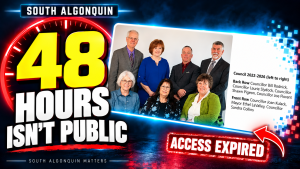
A moment during a Township of South Algonquin meeting in early 2025 raised questions about how leadership is being exercised at the council table.
How the Issue Began
The discussion started during the Human Resources, Administration and Public Relations Committee meeting on February 19, 2025. During that meeting, councillors raised the possibility of appointing a Deputy Mayor following recommendations that emerged from an emergency management tabletop exercise. According to the meeting minutes, Mayor Ethel LaValley excused herself from the discussion while the topic was being debated.
Staff were asked to prepare further information so the matter could return to council for a later decision.
The role of Deputy Mayor is common in municipalities across Ontario. The position allows another member of council to step in when the Mayor is unavailable and often involves representing the municipality at events or meetings.
Because of that responsibility, the choice of who fills the role can sometimes generate strong views around the council table. What is less common is elected leaders opposing the role itself.
Hard-to-Watch Moment
When the topic returned during council discussion, a suggestion was made regarding who should be appointed Deputy Mayor. At that point, the Mayor expressed her opinion and left the room.
For residents watching the livestream of the meeting, the moment was uncomfortable. Council members remained seated at the table while the head of council stepped away during a discussion about the municipality’s leadership structure.
Municipal meetings often include disagreement. But one of the expectations of leadership is the willingness to stay present during difficult conversations. Leaving the table during a discussion about a governance role can create confusion about how the discussion should proceed and who is responsible for guiding it.
The Outcome
Council ultimately moved forward and appointed a Deputy Mayor at a future meeting. The councillor selected for that role had previously been the subject of several Integrity Commissioner complaints involving breaches of the municipal Code of Conduct and Conflict of Interest Act. Those findings included conflict-of-interest concerns, reprisals toward a resident, and breaches of decorum during council proceedings.
Integrity Commissioner reports are intended to provide independent oversight of council conduct and help ensure that municipal governance follows established standards.
When those findings intersect with leadership appointments, it can raise questions about how councils value oversight, and evaluate conduct and leadership expectations.
The Mayor apologized for her behaviour at a following meeting.
What Residents Saw
Council meetings are recorded and publicly available so residents can observe how decisions are made. Moments like this one become part of the public record.
For viewers following the meeting, the exchange created a visible tension at the council table. Instead of demonstrating how disagreement can be managed respectfully, the moment appeared awkward and unresolved.
Leadership is often measured not during routine decisions but during uncomfortable ones – during moments of crises. Remaining at the table for difficult conversations signals a willingness to listen, debate, and work through differences. Walking away can send a different message.
A Broader Leadership Question
Municipal leadership works best when councils operate with clear expectations about conduct, accountability, and collaboration. When tensions between council members become visible in public meetings, it can raise broader questions about how effectively the group is functioning as a governing body.
In smaller municipalities especially, professionalism between council members is essential. Decisions about budgets, infrastructure, economic development, and community services all require councillors to work together despite differing views.
Why This Matters
Council meetings are where decisions about roads, taxes, services, and long-term planning take place. The tone set by leaders during those meetings matters because they may influence how residents view the quality of leadership in their community.
Disagreement is part of healthy democracy. But the way leaders respond to disagreement — whether they engage with it or step away from it — helps define the culture of the council table, and the future of the community.
For residents watching these meetings, the question becomes simple: when difficult conversations arise, do we want leaders who leave, or leaders who will stay at the table to work through them?