Flying Feathers - What Does “Grandfathered Obligation” Mean?
The Question Behind Funding the private Flying Feathers Archery Club
(updated 2026-04-04 with new historical documents from council records)
Flying Feathers Archery Club is a membership based non-profit club that serves recreation opportunities to between 20-30 people in the Township of South Algonquin annually.
For years, South Algonquin council has described the annual $2,500 payment to the Flying Feathers Archery Club as an “operational grant”, “levy” or a “grandfathered obligation.” The implication is the township inherited a legal responsibility for a cost from a previous government and must continue paying it.
But is that actually the case? Or is this simply a funding decision that council has chosen to maintain?
The distinction matters. Public money should be spent through clear policy and transparent decision-making. By current estimates, taxpayers have contributed more than $50,000 over the years to operate the club and subsidize services there, including snowplowing performed by a sitting councillor.
Evidence
The history of the funding tells a more complicated story.
October 6, 1997
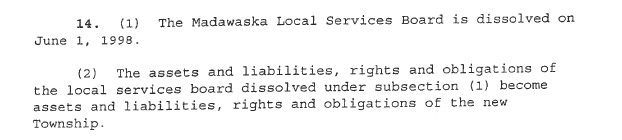
The Township receives a letter from Minister Al Leach explaining the terms of amalgamation, which is to take effect on June 1, 1998.
Before June 1, 1998
Madawaska operated under a Local Services Board that contributed about $2,500 per year to the Flying Feathers Archery Club as part of local recreation programming based on reimbursement after receipts were provided.
June 1, 1998
Five wards amalgamated to form the Township of South Algonquin. According to the video record, payments to Flying Feathers stopped for several years, at which point the club got into ‘financial straights’.
January 29, 1999
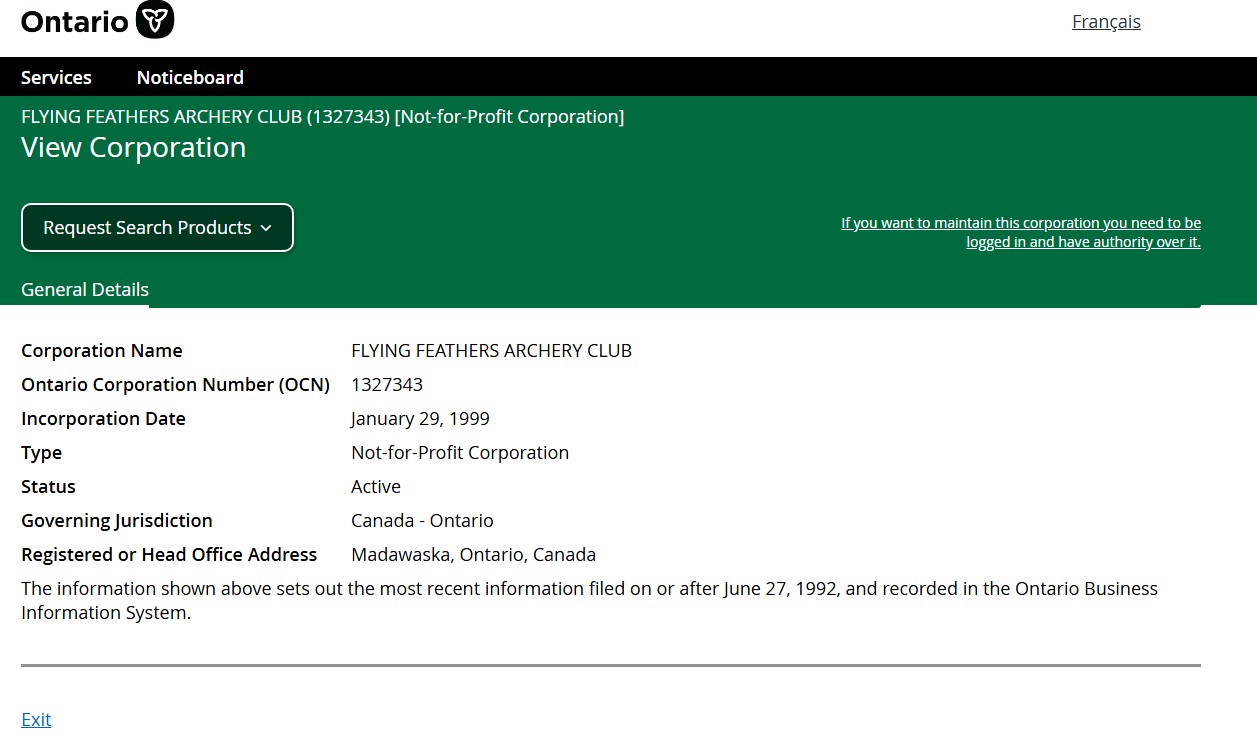
Records show that the following year, Flying Feathers Archery Club incorporated as its own legal entity, separate from the municipality.
2006
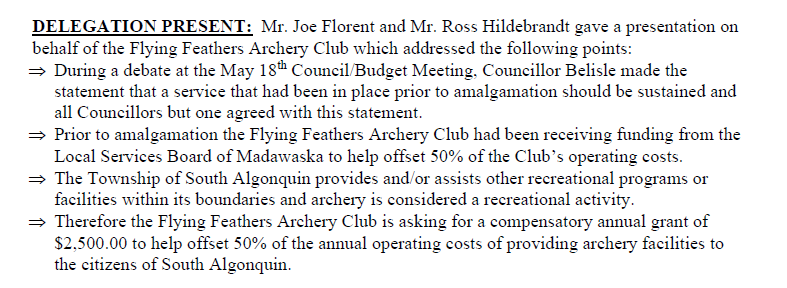
Council minutes show that in July 2006, Joe Florent and Ross Hildebrandt presented a delegation to council. They shared a 1997 provincial letter describing the rules of amalgamation to take effect on June 1, 1998. During discussion, Councilor Belisle proposed and council discussed that council resume the $2,500 funding payment. With only one dissenting vote, council approved what was described as an “compensatory annual grant” to cover 50% of operating costs. Funding resumed and has continued uninterrupted since.
Note that by this point, Flying Feathers had been operating as an entirely separate legal entity, covering its own operating expenses, filing its own income taxes etc, for 7.5 years.
Note also that council did not use the word ‘grandfathered’ in their recording of the event at the time.
2023
A staff report presented to council outlined the history of the Flying Feathers Operational Grant. It also noted that Councillor Florent served as secretary-treasurer of the club and received money from the grant to pay himself for snowplowing services.
Public concern grew after the report was released. The township’s Integrity Commissioner later found that Councillor Florent breached the Municipal Conflict of Interest Act and the municipal Code of Conduct by participating in discussion about the funding despite declaring an interest. Click here for the full article.
Based on public budget documents, funding continued in 2023 and 2024.
March 2025
By this point, the language being used by council to describe the grant changed to “grandfathered obligation”. Council approved a motion to continue the $2,500 annual payment until the end of the current council term, effectively approving the funding for two years. The motion again described the payment as an “annual grandfathered obligation… from the date of amalgamation.”
Notably, this was the first budget item approved in the 2025 budget process, before discussion of tax increases, salaries, expenditures, or other municipal priorities.
By approving two years of funding at the same time there was no opportunity for the public to discuss the funding or provide feedback the following year, 2026.
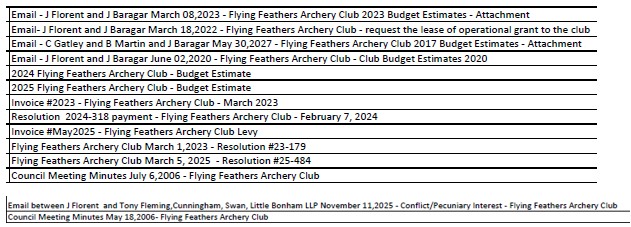
An FOI request for documents referencing Flying Feathers between 1998–2004 and 2023–2026 returned 23 documents. The records show occasional budget estimates submitted by the club. There do not appear to be any council reports describing outcomes tied to the spending. For many of the years queried, the payment did not even appear in council discussion at all.
Governance Background
Municipal restructuring orders do require new municipalities to assume certain obligations from previous governments. These typically include municipal property, debts and liabilities, contracts and agreements, by-laws and municipal programs. They do not automatically create permanent funding commitments or flow of public monies to independent outside organizations unless those commitments were established through a formal agreement. That does not appear to be the case here.
In addition, the situation changed significantly between 1997 and 2001, when the Flying Feathers club incorporated as a non profit and became a fully independent legal entity. Today it operates separately from the municipality and has done so for more than 20 years.
It is the only incorporated organization that receives direct funding from the township outside of a broader grant program. Funding under the current Municipal Grant program does not allow grants toward operational costs.
Analysis
The money has variously been called an operational grant, a levy, and a grandfathered obligation by current council. A “levy” is a special tax used to fund a specific municipal activity. Calling it a levy suggests that Flying Feathers “levies” the fee on the township as a provincial social service organization might (policing, health services etc.). In 2023, council began referring to the payment instead as a “grandfathered obligation.” Both words suggest council has no choice. Yet the original name was “operational grant”, which suggests something different.
Funding stopped after amalgamation for at 7.5 years. It resumed after council opted to interpret a restructuring letter as justification to continue paying the club. Since then, it appears the payment has continued largely on the basis of historical precedent.
In other words, the funding appears to function less like a legal obligation and more like a policy decision that has never been formally reconsidered.
The ongoing conflict-of-interest situation adds another layer. When a councillor repeatedly must step away from discussions involving the same funding decision, it raises broader governance questions about how that decision is structured.
Why This Matters
The Flying Feathers payment is small in the context of the township’s budget. But the principle behind it is not, nor is the amount of cumulative money that has gone directly to pay a sitting councillor for services to his non profit. At the rate of $2500 per year, total payments to Flying Feathers could amount to more than $50,000 since 2006.
If the payment is truly a legal obligation, residents deserve to see and comment on the agreement that requires it. If it is not, then it remains what municipal grants usually are: a choice made by council.
And choices—especially those involving public money and conflicts of interest—are meant to be examined openly before being carried forward for multiple years at a time.