Council Leases Employment Centre to Agilec for $500/month
In May and June 2025, South Algonquin council discussed a proposal to lease municipal space to Agilec, an employment and training service provider. Agilec operates employment support programs across several communities in eastern Ontario, helping people connect with job training, resume assistance, and employment counselling. Agilec’s arrival replaced the previous Employment Centre.
The proposal involved renting space in the municipal building so Agilec could operate a local service office and provide employment support to residents.
After discussion at committee and council meetings, the township approved the lease arrangement recommended by staff, setting the rent at $500 per month.
Market rents are substantially higher. The decision raises an important policy question for a small municipality about how to determine when and by how much to discount rents.
What Agilec Does
Agilec is a non-profit employment services organization funded largely through provincial programs. Its offices provide services such as job search support, resume preparation, training and career planning, employer connections. These services can benefit residents who are unemployed or seeking new work opportunities.
The Whitney location operates out of approximately 630 square feet of office space inside the former employment services building.
The office also serves residents across a large regional area that includes communities such as Lake St. Peter and Barry’s Bay, not just South Algonquin.
The Rental Arrangement
Council approved the lease through By-Law 2025-838 at the June 4, 2025 regular council meeting.
The lease sets out the following rental structure.
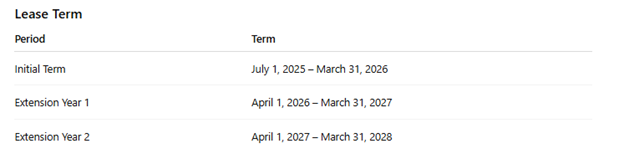
The tenant may extend the lease provided notice is given at least three months before the end of the current term.
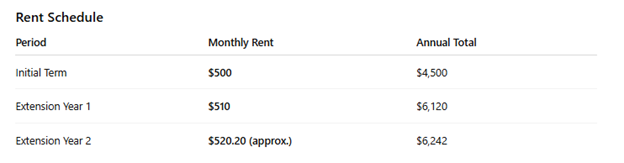
The first increase represents a 2% rent increase, raising the monthly rent from $500 to $510 if the first extension is exercised.
Under the agreement, the township remains responsible for utilities, maintenance, and property costs, including electricity, heating, water, and building upkeep.
Comparing the Rent to Market Rates
A spot check of the Realtor.ca website showed commercial rents in the region at $1,500 to $2,000 per month, depending on the building, services, and utilities included. Often these rates are exclusive of utilities. Council did not discuss market rental rates during the approval process.
Using that regional market range, the difference between the lease rate and typical commercial rents may represent a substantial discount.

In practical terms, the township may be charging less than half of typical market rent.
The township also pays utilities, maintenance, and building costs under the lease.
Limited Discussion at Council
The proposal first appeared at the May 22, 2025 Human Resources, Administration and Public Relations Committee meeting.
Committee meetings are often where detailed discussion occurs before recommendations move forward to council for final approval. In this case, the discussion was relatively brief before the proposal moved ahead to council.
When council formally considered the matter at the June meeting, the bylaw approving the lease was passed without a lengthy debate.
Municipal councils frequently approve partnerships with community organizations, and in many cases these decisions are straightforward. However, the speed of the discussion raises questions about whether council fully examined the broader financial implications.
Financial Context
The lease decision comes at a time when South Algonquin faces several financial pressures.
Recent financial statements show the township managing ongoing costs for roads, infrastructure, and other municipal services. At the same time, the township’s asset management planning process has identified long-term infrastructure needs that will require significant investment in the future.
Municipal budgets must balance immediate service needs with long-term infrastructure obligations.
Every dollar spent on administration, programs, or subsidies is a dollar that cannot be used for roads, facilities, or reserves.
Because of that, even relatively small financial decisions can become important when considered over multiple years.
Regional Benefits vs. Local Costs
The geographic scope of Agilec’s services is another consideration. The Whitney office serves clients from a broad region, not only residents of South Algonquin.
Regional service delivery is common in rural areas, but municipalities sometimes address this through cost-sharing agreements, regional partnerships, service contracts between municipalities. The township’s budget does not show any income related to the Agilec lease from parties other than Agilec.
In this case, there does not appear to be any indication during the discussion that neighbouring municipalities would contribute toward the cost of the space.
Why This Matters
Decisions about subsidized space are not unusual in small communities. Municipal buildings are often used to support services that benefit residents. However, these decisions work best when councils clearly consider three questions:
- What public benefit does the service provide to local residents?
- Is the subsidy proportionate to that benefit?
- Should the cost be shared with other communities that benefit from the service?
The decision to lease space to Agilec may ultimately provide valuable employment support to residents. But it also illustrates a broader challenge facing small municipalities: how to balance community partnerships with the financial responsibility of managing limited tax dollars.
As South Algonquin continues to address infrastructure needs, rising service costs, long-term financial planning, and tax increases, discussions like this one highlight why careful consideration of even small budget decisions matters.