
Emails Show Building Inquiry Sent to Non-Owner in Whitney Property File
Emails from March 2022 show that a building inquiry by the Township of South Algonquin was sent to a third-party individual who did not own the property, raising questions about how the inquiry was initiated and handled, information privacy, and how information was shared with third-parties.
Context
Documents from early March 2022 relate to a building inquiry concerning a property in downtown Whitney, Ontario known locally as “Elva’s”.
At the time, the property was owned by two private individuals.
Evidence
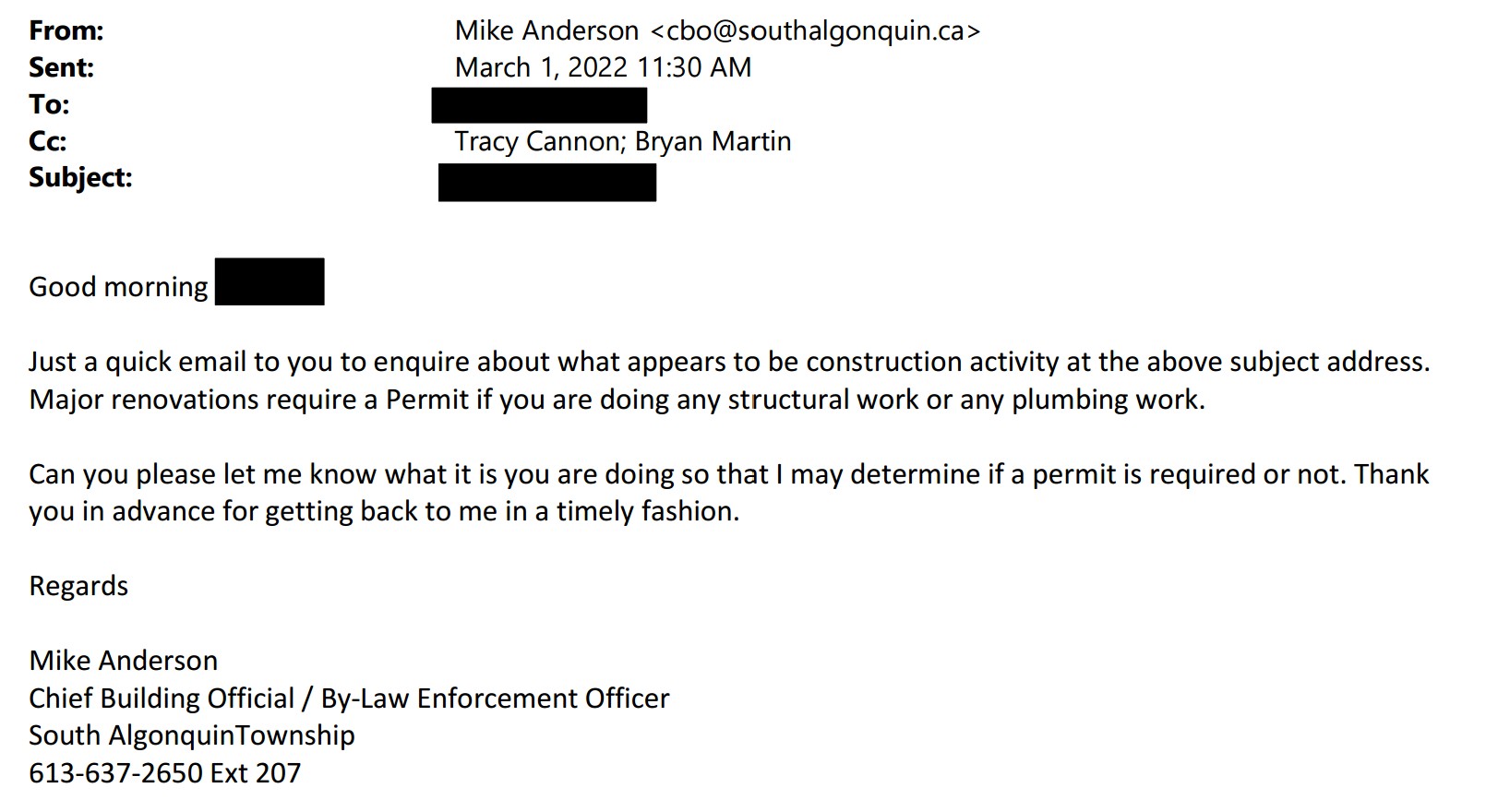
On March 1, 2022 at 11:30 AM, the Township’s Chief Building Official and By-Law Enforcement Officer sent an email to the third-party individual regarding “what appears to be construction activity” at the property.
The email asked this third party to provide details about the work being done so the Township could determine whether a building permit was required. The third party was not on record as owner of the property. The message was also copied to other municipal staff, including the Clerk and Planning and Building Administrator.
The individual attempted to contact the CBO by phone in a timely fashion, as requested; however, available evidence indicates the call was deliberately not answered.
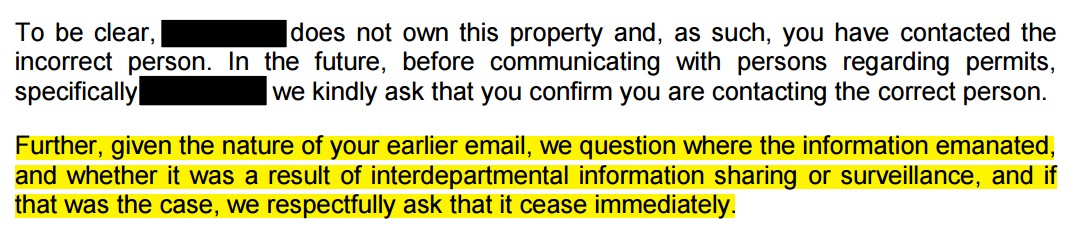
On March 10, 2022, legal counsel acting on behalf of the third-party individual wrote to the Township advising that the recipient of the letter did not own the property and that the Township had contacted the wrong person.
The letter also asked how the Township became aware of the activity, including whether the information may have resulted from “interdepartmental information sharing or surveillance”.
Later that same day (March 10, 2022 at 4:53 PM), an internal email from the Chief Building Official obtained through an FOI confirmed:
- The property was owned by two individuals
- The recipient had been contacted because they had (allegedly) previously acted on the owners’ behalf
- The third party had no title relationship with the property
- The recipient did not have authority over the property
Records reviewed show that the CBO did not have an owner’s authorization to communicate with the third party. They also suggest that the matter was dropped without any follow-up contact with the property owners or this third party after they were contacted by the third party’s lawyer.
The same email states: “I believe [the individual] is likely upset because I did not answer his phone call of the same day as I wanted to have a trail.”
The potential building permit issue was dropped entirely.
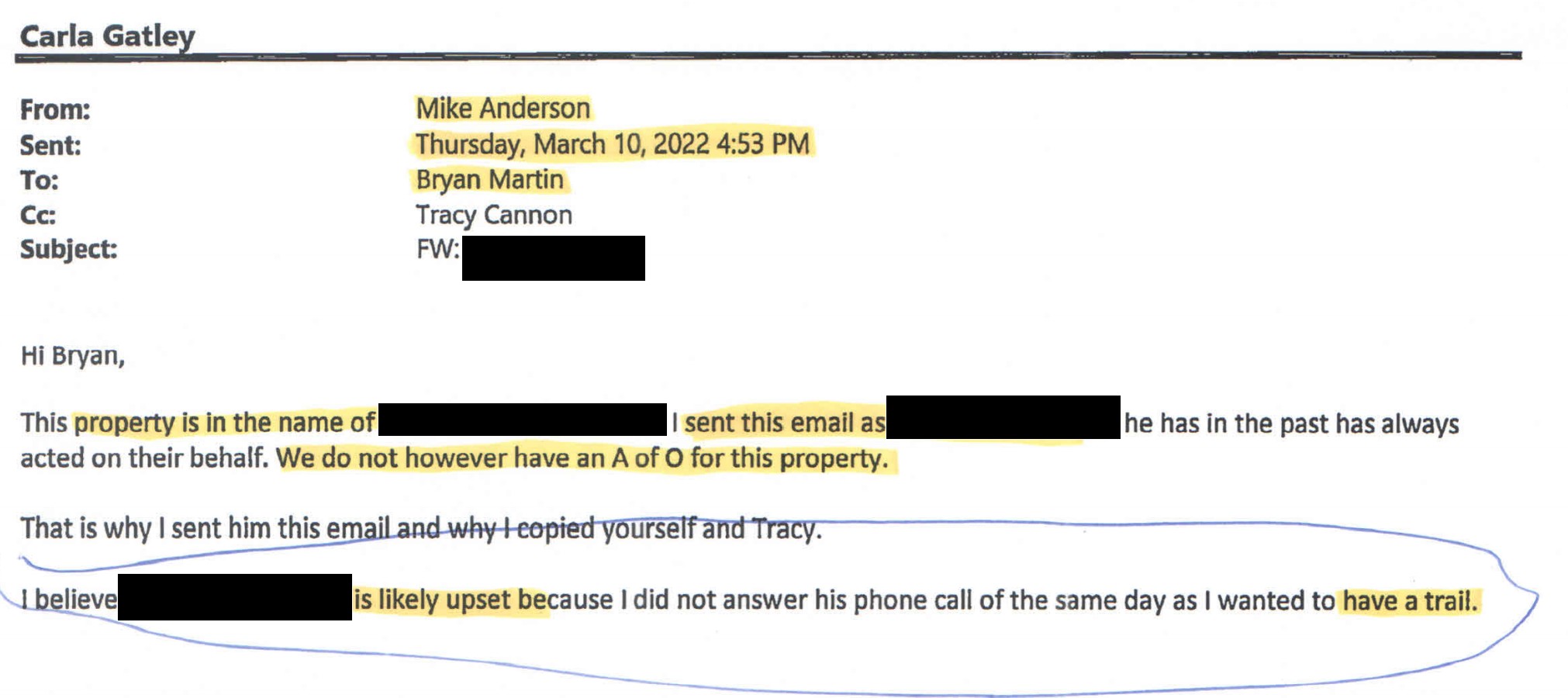
"I did not answer his phone call of the same day as i wanted to have a trail."
Findings
The records show that:
- A building inquiry was sent to an individual who did not own the property
- The Township later confirmed the correct property owners
- The official acknowledged the contacted individual did not have authority over the property
- A decision was made not to answer a phone call in order “to have a trail”
- No follow-up contact with the property owners or third party is evident in the records reviewed
The documents reviewed do not indicate how the Township first became aware of the activity at the property.
Could situations like this point to a broader pattern?
This is not the first time concerns of surveillance of private individuals and property has been raised in the community. For more context, see our earlier reporting: What happens when you file a complaint – South Algonquin Matters
In context, this aligns with a broader pattern in which the Township allegedly shapes communication methods—sometimes restricting or redirecting contact to create a written record—without clearly documented criteria, timelines, or avenues for review.
Why This Matters
Municipal officials are responsible for enforcing building and permit requirements according to pre-established rules. Moreover, municipal officials are required to follow the Municipal Freedom of Information and Protection of Privacy Act (Ontario) when sharing information in their possession about private individuals. The effectiveness of that process depends on accurate, and timely information and communication with the appropriate parties.
When an inquiry is directed to someone who is not the property owner, it raises questions about how information is gathered, shared, and how enforcement processes are carried out.
How a municipality structures communication also matters. When the method of communication is controlled without clear standards or review, it can affect who is heard, how quickly issues are resolved, and whether decisions are made with complete and accurate information.
Questions for Readers
- What did the official mean by wanting “to have a trail”?
- What documentation practices are typically used in situations like this?
- Is it appropriate to initiate an inquiry but not to awnswer a phone call from the person contacted?
- Once the correct property owners were identified, what follow-up would normally be expected?
- How should municipalities handle similar situations?