What happens when you file a complaint
Documents Raise Questions About How Municipal Complaints Are Handled
Municipal policies point residents to instructions for how to complain about experiences, staff behaviour, safety issues and other items the municipality is responsible for. These processes are a normal part of municipal operations.
Normally, processes include complaining in writing, with an identifiable complainant although the complainant’s identity is considered private in most cases. The act of writing the complaint down protects all parties involved, and many organizations will not action a complaint unless it is in writing.
The formal complaint process creates written records that can be used for investigation and training purposes, to improve processes and to measure progress and improvement. Formal complaints are also important to make sure serious violations are documented and can be examined in future to find patterns or areas of service where the municipality may direct resources to reduce friction and improve service delivery.
Context
Documents related to a 2020 complaint filed with the Township of South Algonquin provide insight into how that process operates when the municipality is responsible for investigating its own actions.
During part of the period surrounding these events, the Township’s two most senior officials were in a family relationship. Between 2018 and 2022, the Mayor of South Algonquin was the aunt of the municipality’s Chief Administrative Officer (CAO). The process at the time involved complaints about the CAO being referred to the Mayor.
Family relationships in small communities are not unusual. However, such relationships can raise governance questions where oversight and administrative roles intersect—particularly where complaint processes involve municipal staff and reporting relationships between relatives.
The Complaint
In October and November 2020, a resident submitted a formal complaint regarding several interactions with Township staff. According to the complaint documents, concerns included:
- A staff member smoking during a site visit
- Staff taking photographs during a property visit
- A dispute at the Township office
- Questions about how complaints are handled and escalated
- Statements that led the resident to believe they were being monitored
The complaint also raised concerns about process, including:
- Whether complaints were handled consistently
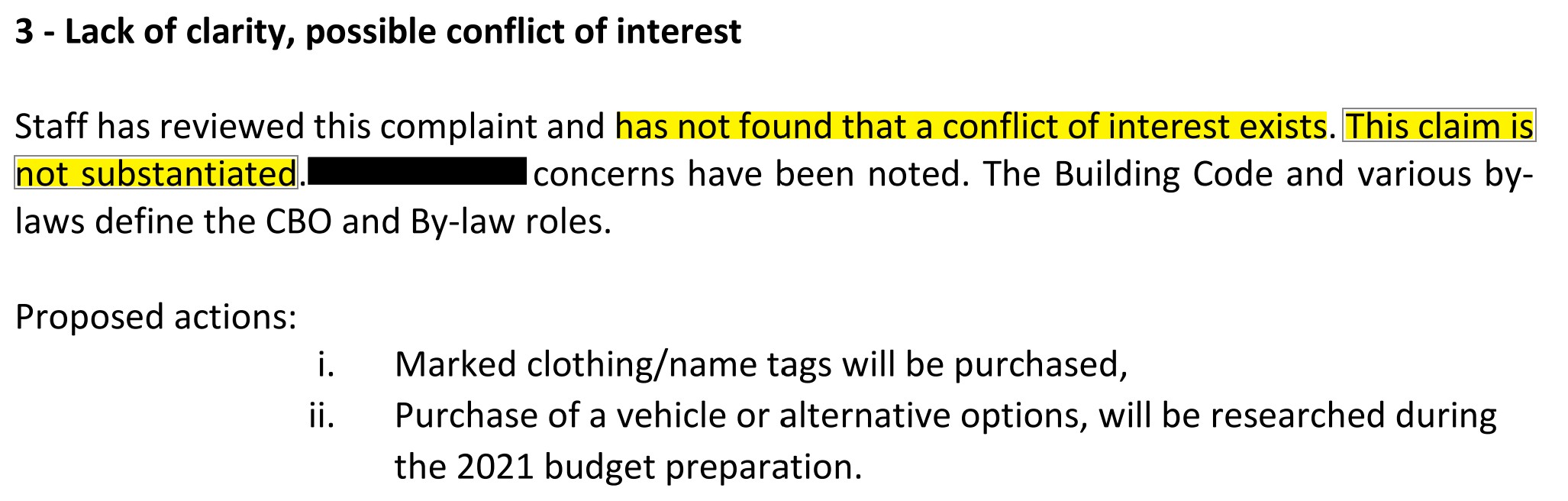
- Whether staff clearly identified themselves and their roles
Whether existing policies addressed conflicts of interest and oversight
The Township’s Response
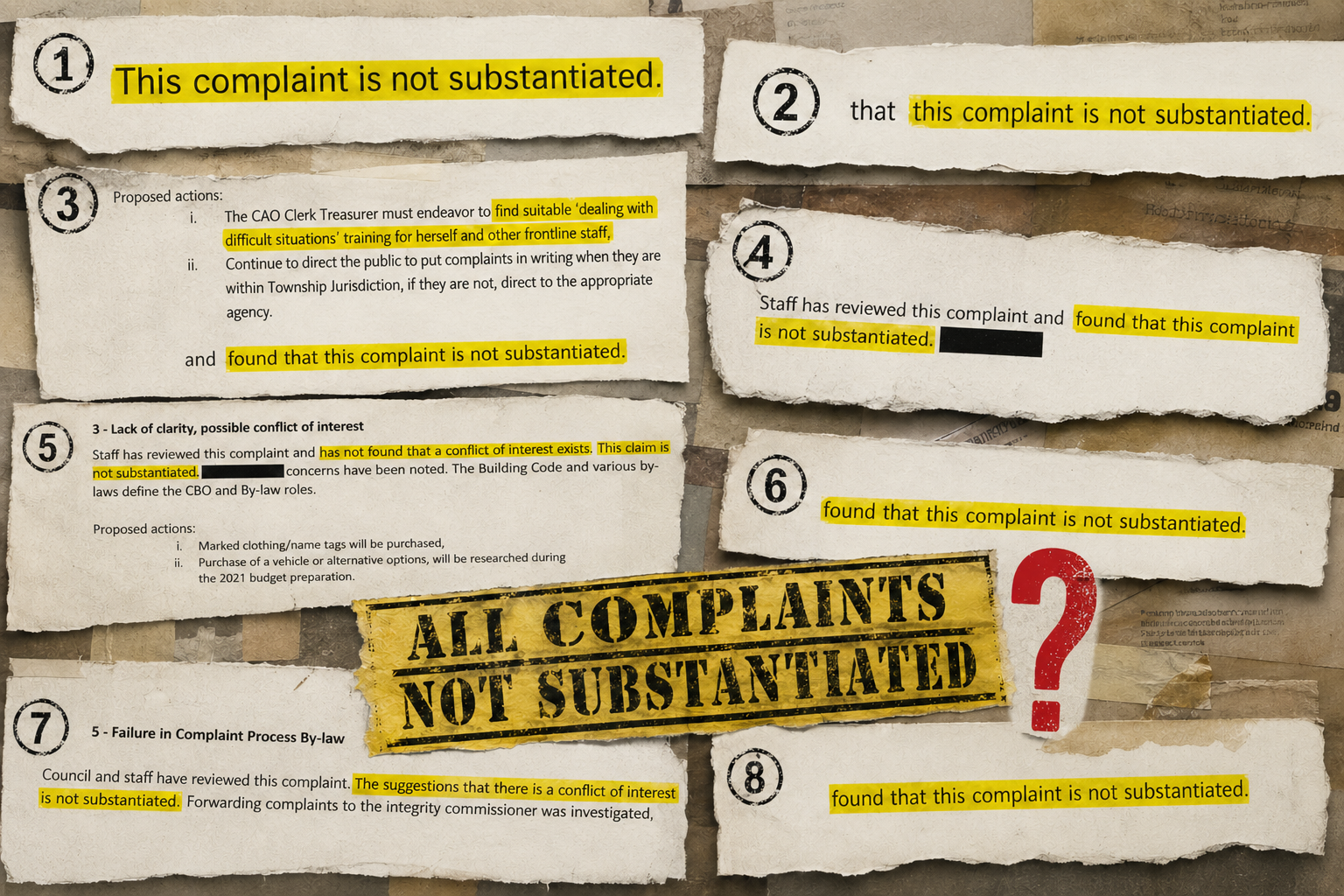
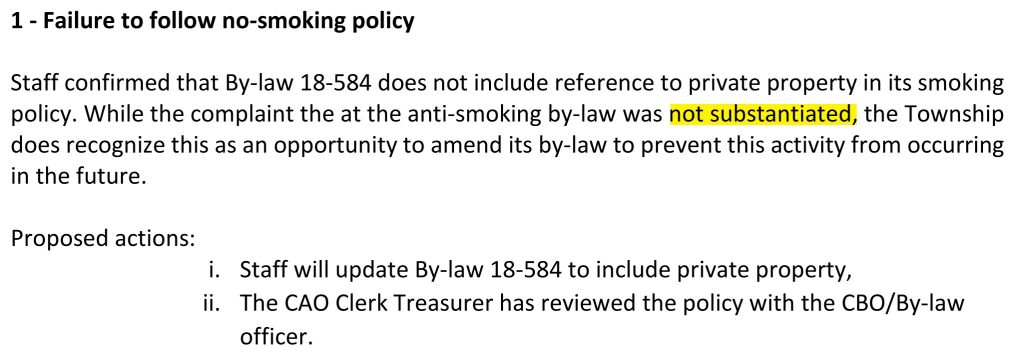
On December 4, 2020, the Township issued a formal response stating that the complaints had been “carefully reviewed” and an investigation into each complaint occurred in accordance with the Complaint Policy. The response concluded that multiple complaints, including those related to photographs, staff conduct, and alleged surveillance, were “not substantiated”. Further, no staff misconduct was found.
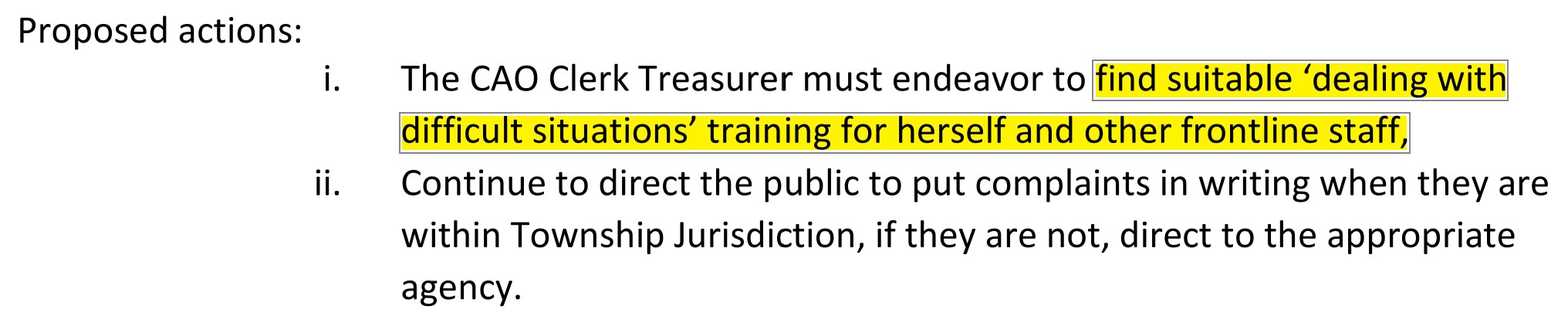
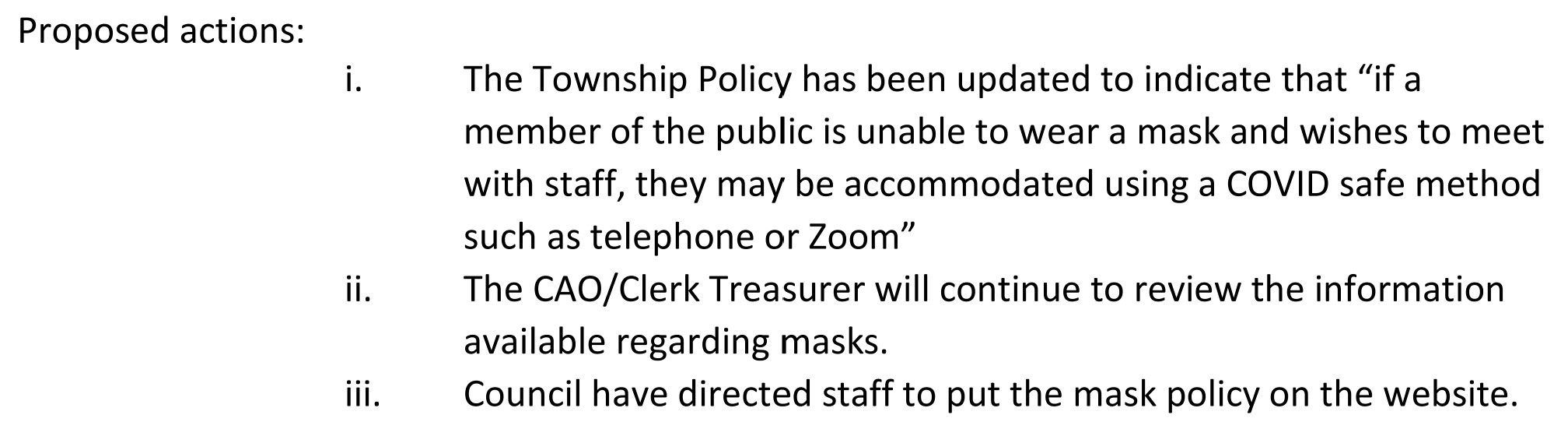
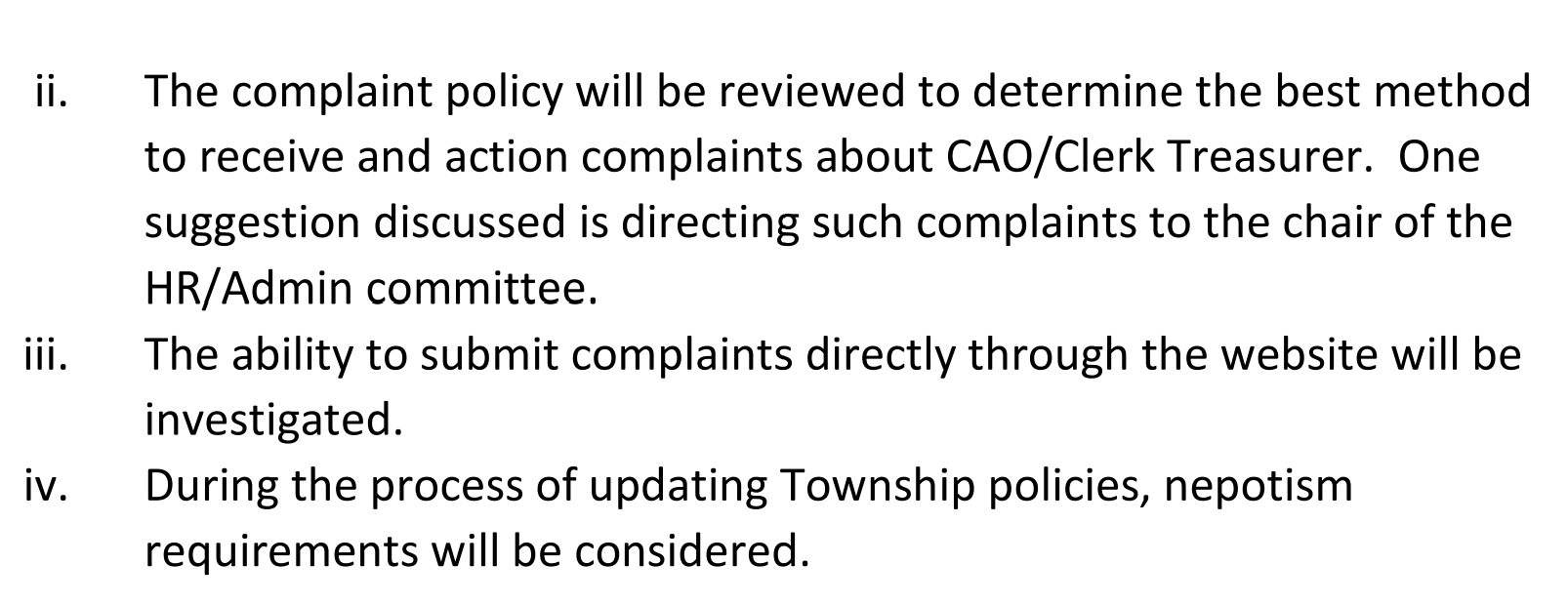
Yet, at the same time, the Township also identified potential policy improvements, including:
- Clarifying the anti-smoking by-law
- Reviewing complaint handling processes
- Considering updates related to training and internal procedures
Concerns Raised in Legal Correspondence
On December 15, 2020, legal counsel for the complainant responded to the Township’s findings. In a letter, counsel states the Township did not conduct what could reasonably be described as an independent investigation. The review appeared to consist of Township staff assessing their own conduct. And finally, “at no point was [the complainant] ever contacted to provide his version of events.”
The correspondence further describes the process as “inherently procedurally unfair”.
The letter also raises concerns about specific findings, including:
- Conclusions being reached without direct input from the complainant
- The absence of supporting details in some determinations
- Questions about how certain concerns—such as alleged surveillance—were assessed
Earlier Context: Cease and Desist Letter
Prior to the formal complaint process, legal counsel had also written to the Township on October 29, 2020, raising concerns about staff interactions. That correspondence states that:
- Staff attended a property following what was described as a verbal complaint
- Photographs were taken during the visit
- The client believed there had been a pattern of ongoing attention toward the property
The letter requested that future communications be handled through legal counsel and that advance notice be provided before further site visits.
A Key Question About Process
Taken together, the documents show:
- A formal complaint raising both conduct and process concerns
- A Township response concluding all complaints were not substantiated while at the same time agreeing to make changes
- Legal correspondence questioning how the investigation was conducted
The central issue raised in the correspondence is procedural: whether a complaint process can be considered complete when the review is conducted internally by the same people who the complaint was about, the complainant is not interviewed, and the findings rely primarily on the internal accounts.
Why Procedural Fairness Matters
Procedural fairness is a principle in administrative decision-making. It generally requires that processes be impartial, transparent and inclusive of relevant perspectives
In many cases, this includes:
- Informing the complainant how the investigation will proceed
- Providing an opportunity to present their account
- Ensuring a degree of independence in the review
When these elements are absent, the process itself may become the subject of concern, regardless of the outcome.
Why Governance and Oversight Matters
Municipal governance relies on a separation of roles: Council provides oversight. Staff administer operations.
Where complaint processes involve municipal staff, some municipalities rely on additional safeguards—such as external investigators or independent oversight mechanisms—to address potential concerns about impartiality.
When Complaints Are Not Resolved
When concerns remain following an internal formal complaint process, they may continue through other channels, including:
- Freedom of Information (MFIPPA) requests
- Complaints to the Ontario Ombudsman
- Complaints to an Integrity Commissioner
This can become costly in terms of time. In some cases, disputes may proceed to legal action and legal costs.
Accountability Protects the Everyone
Formal written complaint processes serve to address concerns, identify opportunities for improvement and maintain public confidence and trust. When processes are clearly documented and consistently applied, disputes may be resolved earlier at less cost, or they may be prevented entirely. Where concerns remain, the process itself may become the focus of further review and attention.
Questions Worth Asking
- Should complaints about municipal staff be investigated internally or by independent reviewers?
- Should complainants be interviewed as part of the process?
- What safeguards should apply when complaints involve municipal administration?
- How can municipalities maintain confidence in their complaint processes?
In this case, a tougher question may be warranted: is the system designed to resolve issues, or to protect itself—and if so, at whose expense?