
Township Tells Homeless Man To Leave Survival Site, Threatens Trespassing Charges And Disposal Of Belongings
This is a developing story.
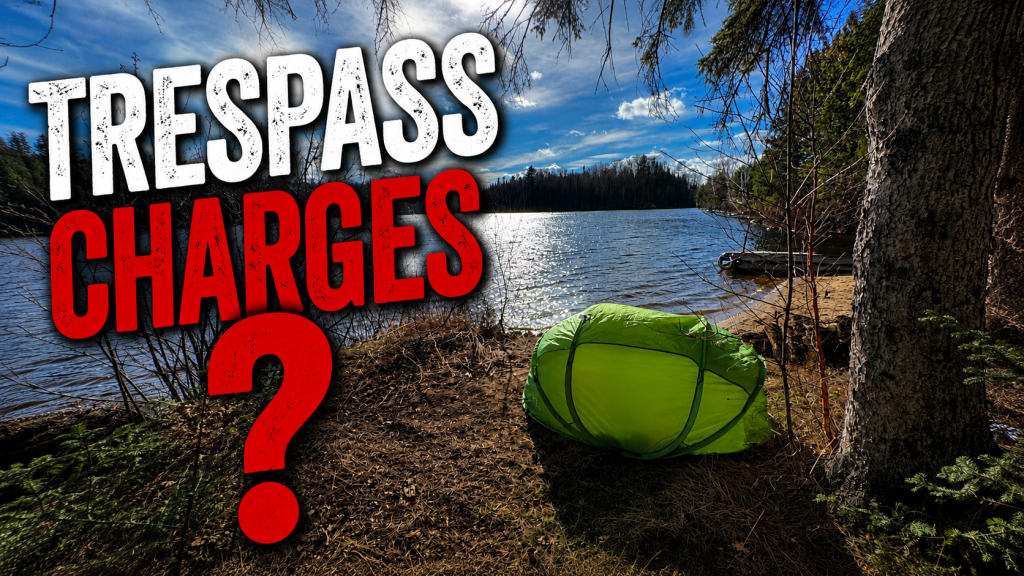
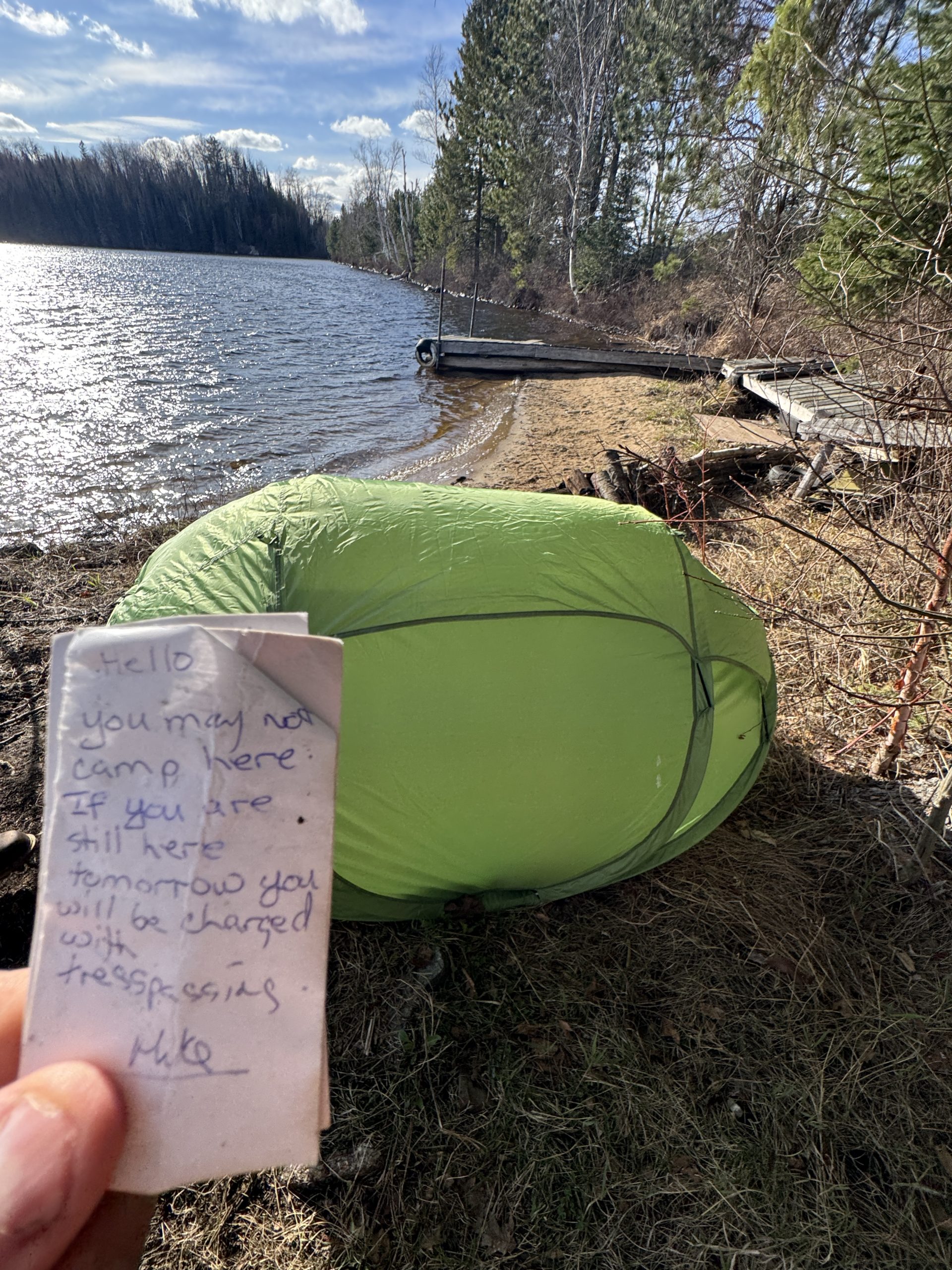
Photos reviewed by South Algonquin Matters show handwritten enforcement notices left beside a small shoreline tent occupied by a man who says he is homeless and living outdoors in South Algonquin.
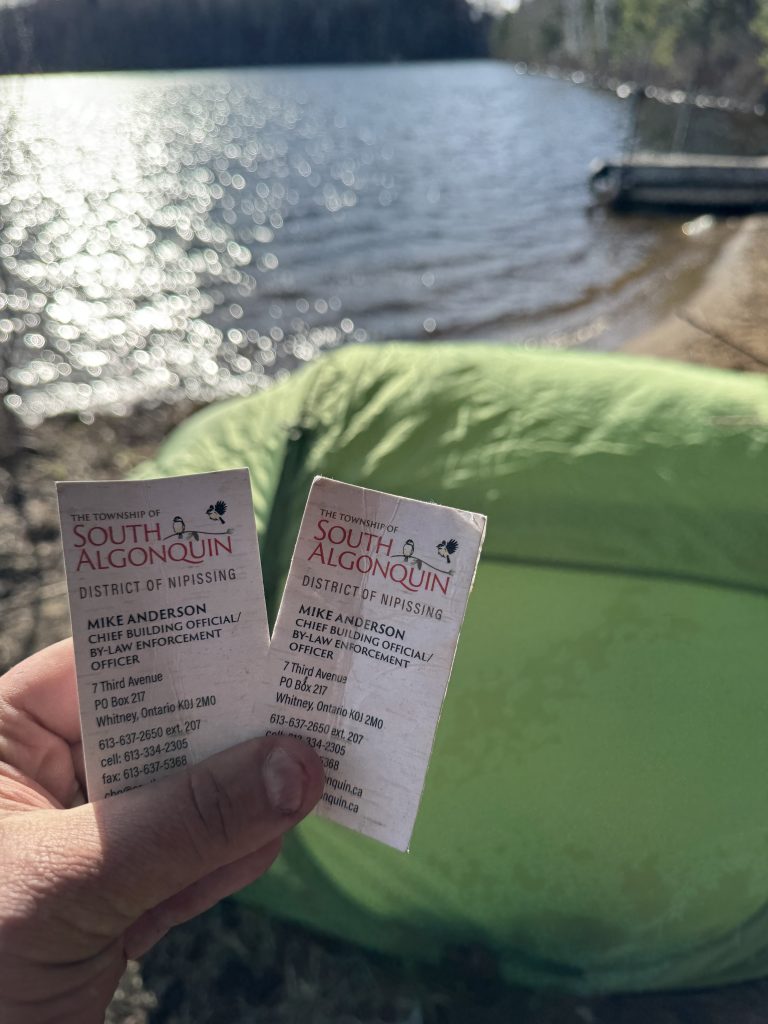
One notice, written on the back of a municipal business card belonging to the Township’s Chief Building Official and By-Law Enforcement Officer, states:
“You may not camp here. If you are still here tomorrow you will be charged with trespassing.”
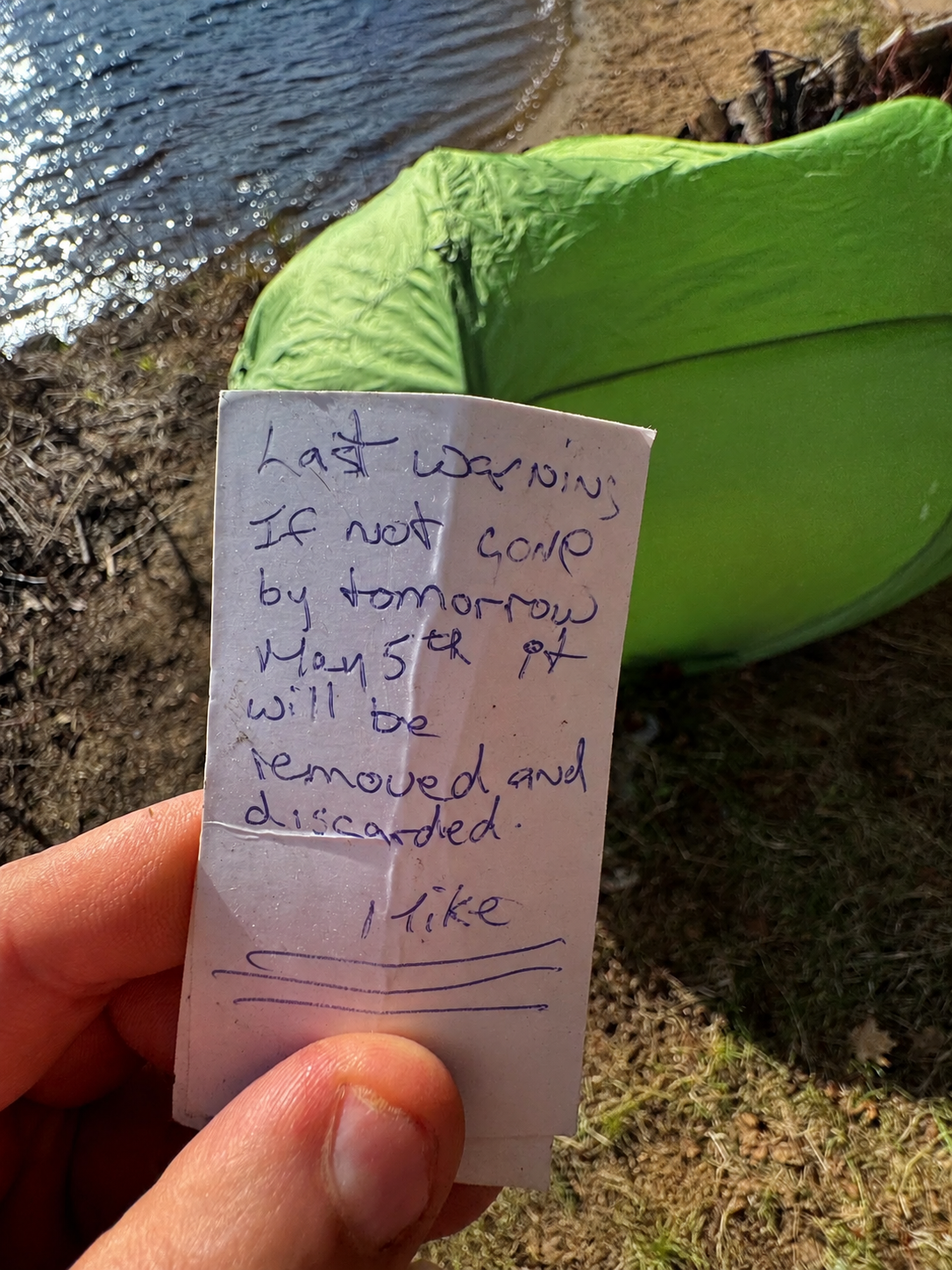
A second states:
“Last warning. If not gone by tomorrow May 5th it will be removed and discarded.”
According to the man, he was told he should go to Bancroft instead.
South Algonquin has no public transportation connecting residents to Bancroft or neighbouring service centres. There are no municipal transit services, no regional buses, and few realistic transportation options for residents without access to a vehicle.
For someone living outdoors, “go somewhere else” may not be a practical solution. Critics argue it does not solve homelessness. It relocates it.
The incident is now raising broader questions about how rural municipalities respond to homelessness when there are few local supports, no emergency shelter space, and limited housing availability.
Questions About Enforcement Authority
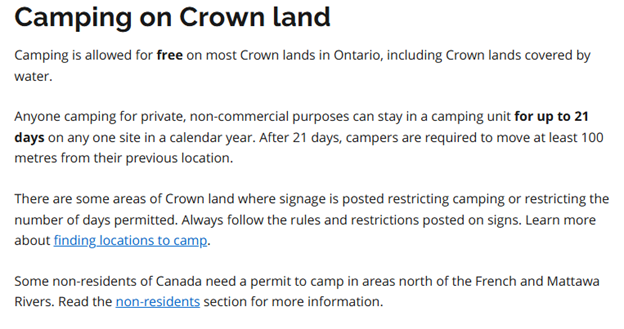
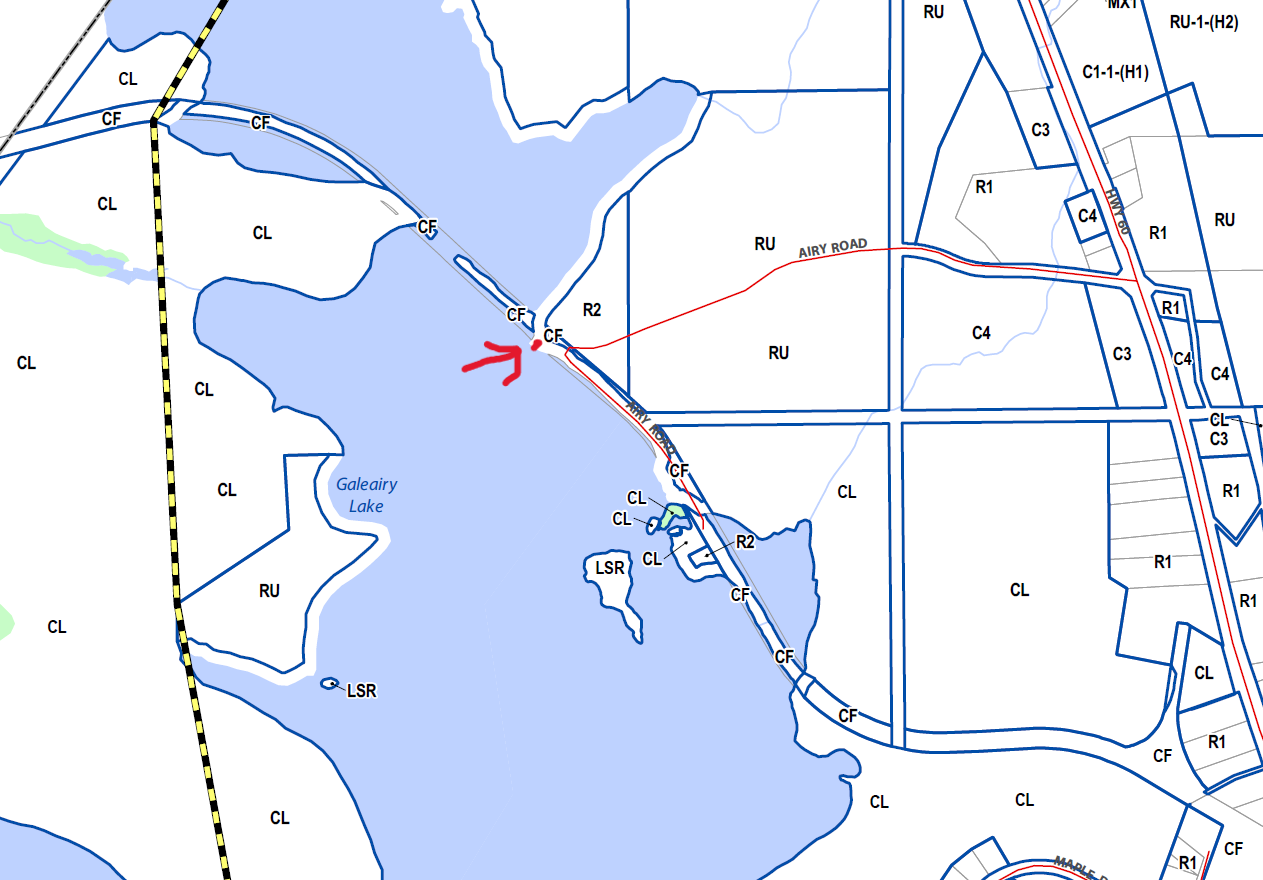
Municipal bylaw officers can enforce bylaws and trespassing rules on municipal property. However, questions remain about the status of the land involved in this incident.
Mapping reviewed by South Algonquin Matters suggests the legal status of this shoreline corridor appears more complex than ordinary private municipal property, raising legitimate questions about the exact authority relied upon to exclude a homeless individual from an open public shoreline trail and road allowance.
That issue is not yet clear.
Across Ontario, courts have increasingly scrutinized enforcement actions involving homeless encampments where individuals have nowhere realistic or safe to go. While encampments are not automatically lawful, courts have recognized that enforcement can engage Charter protections when outdoor sleeping becomes a matter of basic survival.
The warning that belongings could be “removed and discarded” may also raise concerns among housing and legal advocates.
For individuals living outdoors, tents, blankets, medication, identification, clothing, and food supplies may represent everything they own. In rural communities with few supports, losing those items can carry serious health and safety consequences.
A Rural Problem With Few Rural Solutions
Unlike larger municipalities with shelters, warming centres, transit systems, and outreach teams, many rural communities have few emergency supports available locally.
South Algonquin currently has none of these supports.
In practice, that can leave vulnerable residents facing an impossible choice: leave the community, attempt to survive outdoors, or face enforcement for having nowhere else to go. Without realistic alternatives in place, critics argue enforcement can begin to resemble the criminalization of poverty itself.
The incident is also renewing debate about whether enforcement is advancing faster than practical solutions.
Community organizations, businesses, regional partners, and residents are actively discussing transportation coordination, housing concepts, accessibility initiatives, and emergency support ideas.
Some participants involved in those discussions say they have struggled to secure consistent municipal momentum or support around proposed solutions.
In January 2025, two local business owners sent an offer to the township to discuss a transfer of land to the township for housing. The Mayor advised that they would forward the letter to the District of Nipissing Social Services Board for consideration. A freedom of information request in March 2026 showed the email was never forwarded.
Why This Matters
This incident raises multiple questions, and all of them matter.
It raises questions about how municipal enforcement powers are exercised, especially when land ownership and jurisdiction may not be straightforward.
It raises questions about what happens when enforcement collides with the absence of realistic alternatives in a rural community with no shelter, no transit, and limited supports.
And it raises broader questions about leadership and priorities at a time when housing and homelessness are increasingly becoming defining local election issues across Ontario, including in South Algonquin.
Mayor Ethel LaValley ran on addressing housing issues during the 2022 election. No new housing units were created during the term.
As the next election approaches, residents may increasingly ask whether local leadership is focused on solving homelessness — or simply removing visible signs of it.