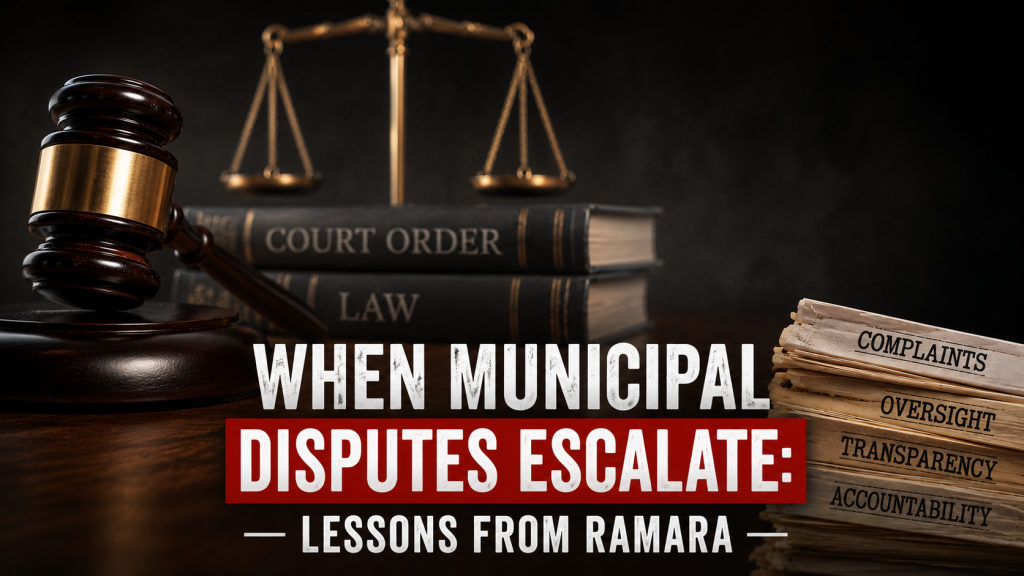
When Municipal Disputes Escalate: Lessons From Ramara
A small Ontario township is making headlines—and not for the reasons any community would want.
The Township of Ramara has been found in contempt of court, a serious legal ruling that means a judge determined the municipality failed to comply with a court order. But the situation goes beyond that single finding.
Court records point to an escalating dispute involving enforcement, compliance, and the township’s handling of its legal obligations. A contempt ruling is not issued lightly—it typically follows repeated concerns, missed deadlines, or a failure to act after the court has already intervened.
In cases like this, the consequences can extend far beyond reputational damage. Contempt findings can lead to financial penalties, increased court oversight, and deeper scrutiny of how a municipality operates.
For residents, it raises broader questions about governance, accountability, and whether decisions are being carried out within the bounds of the law.
What happened in Ramara?
For nearly a decade, residents in Lagoon City were in a dispute with the township over a shoreline bylaw.
The matter went before the Ontario Superior Court of Justice.
In late 2024, a judge ruled that the township’s bylaws were not valid and had to be set aside. The court also found the township acted in bad faith—a significant legal finding that means its actions were not carried out fairly or honestly.
But the ruling did not end the matter.
The township was later ordered to comply with the decision and issue permits. When it failed to fully follow through, the court stepped in again.
In 2026, a judge found the township in contempt of court.
That’s not a routine outcome. Courts reserve findings like this for situations where orders have not been respected.
What did the township say?
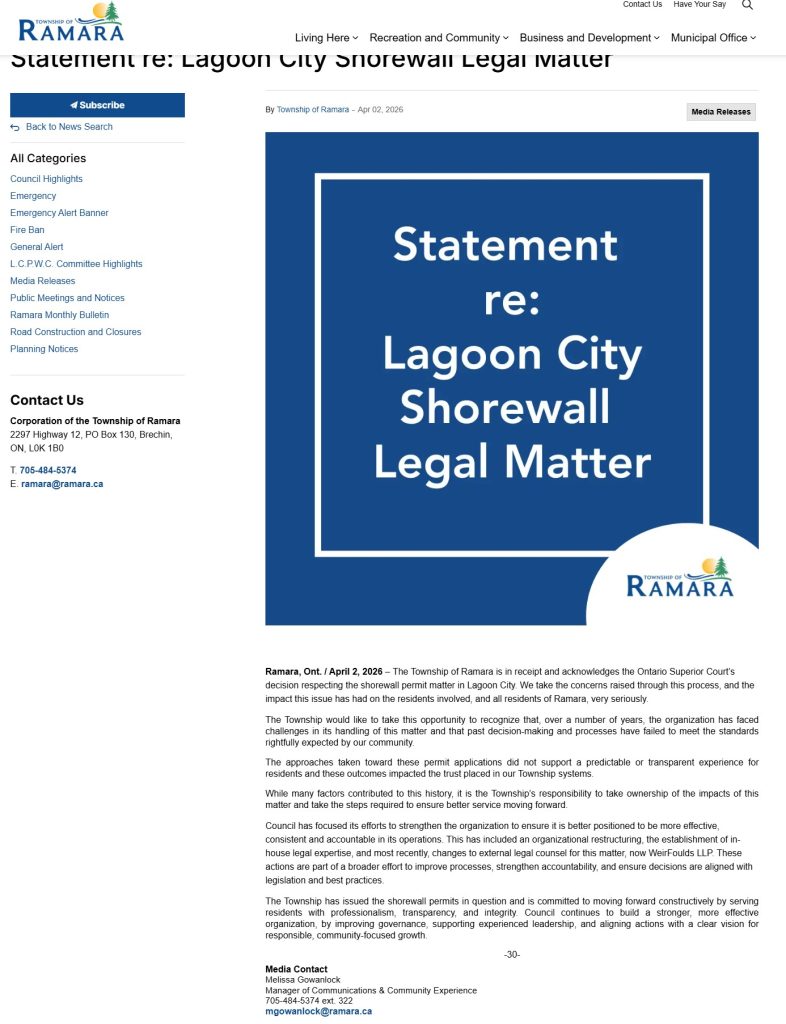
After the ruling, Ramara issued a public statement.
The township said it “recognized” the situation and spoke about making improvements going forward.
But one thing stood out:
- There was no clear apology.
- No direct acknowledgment of wrongdoing.
For many residents, that distinction matters.
After years of legal conflict, people often expect more than forward-looking language—they expect accountability for what has already happened.
Why this matters
This case illustrates a broader pattern.
When issues are not addressed early, they rarely disappear. They grow.
Concerns can evolve into:
- Freedom of information requests
- Formal complaints to the township
- Reviews by the ombudsman or integrity commissioner
- Involvement from other oversight bodies
And from there, the situation can escalate into legal action. That process can end with courts stepping in—and issuing strong rulings.
Why this matters for South Algonquin
In the Township of South Algonquin, there have already been:
- Integrity Commissioner findings
- Ombudsman involvement
- Involvement from other oversight bodies
- Ongoing disputes around transparency and decision-making
- Attempts that could be perceived to reduce or block access to information
- Serious concerns about charter rights and freedoms in local context.
These are often early warning signs in any municipality.
Ramara did not reach a contempt ruling overnight.
It took years of conflict, unresolved concerns, and decisions that continued to be challenged.
Could South Algonquin be on a similar trajectory?
That’s the question worth asking.
No one can predict the outcome. But the pattern is familiar:
- When concerns are raised and not addressed…
- When oversight bodies are repeatedly engaged…
- When trust between residents and leadership begins to break down…
Ramara is a great example of how small situations can escalate when decisions, and the wishes of citizens, are not respected.
Table of Contents
Updated 2026-05-16
Sources